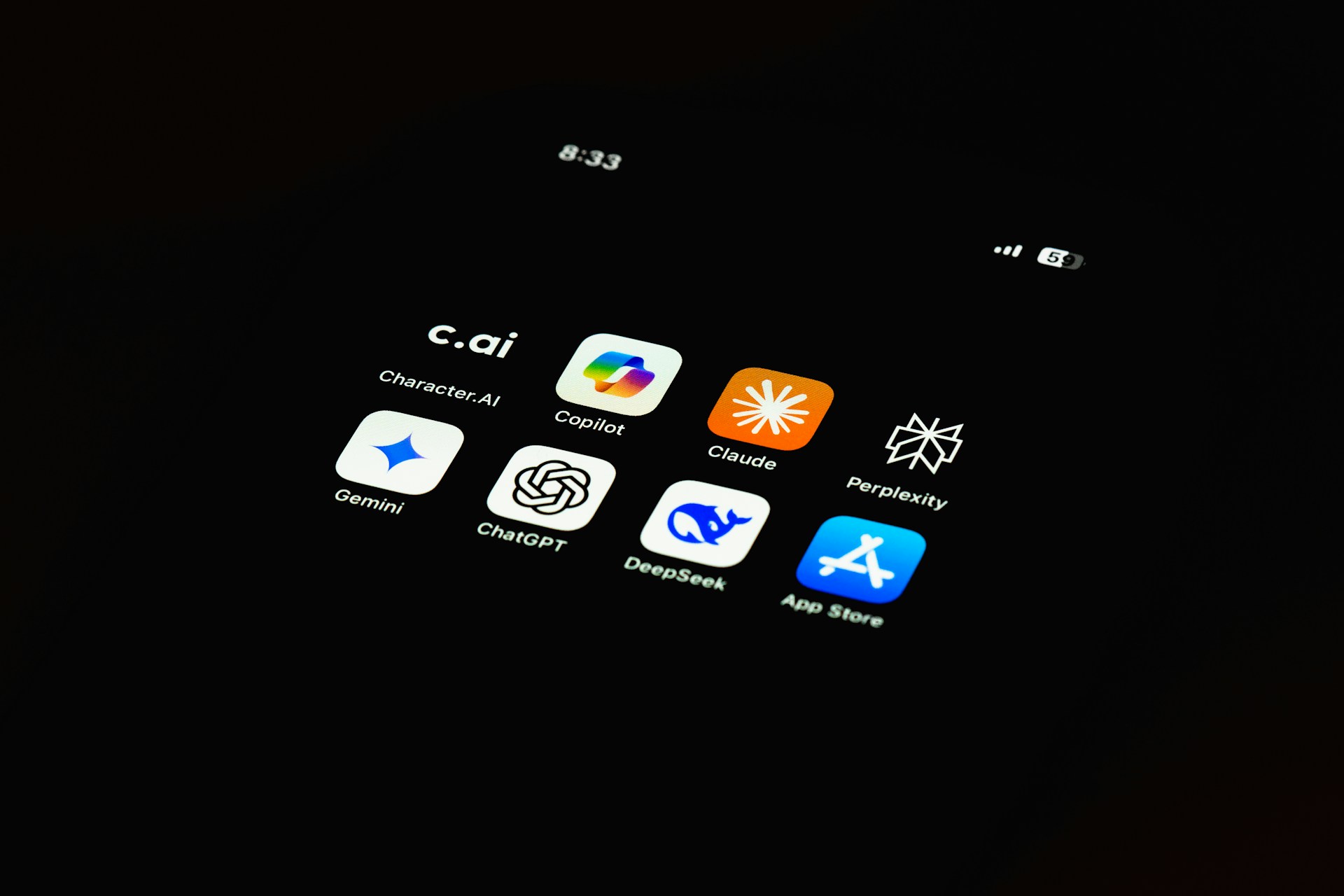
In today's rapidly evolving educational landscape, artificial intelligence (AI) tools for personalized learning are revolutionizing how we approach learning by creating truly personalized experiences. These innovative AI tools for personalized learning adapt to individual learning styles, identify knowledge gaps, and deliver customized content at the optimal pace and difficulty level. This comprehensive guide explores the most effective AI tools for personalized learning, their benefits, implementation strategies, and real-world impact across educational and corporate settings.
How AI is Transforming Personalized Learning

Photo by Tara Winstead on Pexels
Personalized learning has long been an educational ideal, but traditional approaches often lacked scalability and real-time adaptability. AI tools are addressing these limitations by creating dynamic, responsive learning environments that continuously adapt to individual learners. These technologies analyze learning patterns, identify knowledge gaps, and deliver customized content—all while automating administrative tasks that traditionally consumed educators' time [1].
These AI tools for personalized learning also promote equity in education by making high-quality resources accessible to learners from diverse backgrounds.
Research demonstrates the tangible impact of this approach: AI-driven personalized learning increases retention rates by up to 30% and improves skill mastery by 24% compared to traditional methods [6]. As these technologies continue to evolve, they're reshaping how knowledge is delivered, assessed, and retained across educational institutions and corporate training programs.
AI tools for personalized learning demonstrate significant advantages over traditional educational methods, offering tailored approaches that meet learners' unique needs and preferences.
Key Benefits of AI-Powered Personalized Learning

Photo by Dmitry Burdakov on Unsplash
Personalization at Scale
AI systems analyze individual learning patterns to create tailored educational experiences. Platforms like Cornerstone Skills Graph match learner skills to roles and training content using a comprehensive dataset of 50,000+ skills, enabling hyper-personalized learning journeys that adapt to each user's unique needs and goals [2].

This level of personalization was previously impossible at scale, requiring prohibitive amounts of human resources. AI makes it accessible to organizations of all sizes, democratizing access to customized education.
With the integration of AI tools for personalized learning, educators can efficiently monitor student progress and adapt their teaching methods accordingly.
Enhanced Engagement and Motivation
The adaptive nature of AI-powered learning tools significantly boosts learner engagement. Studies show that 54% of learners report higher engagement when AI tools are integrated into their educational experience, as interactive content and gamified elements maintain motivation over time [6][9].
AI tools for personalized learning facilitate a deeper understanding of subject matter by providing instant feedback to students, encouraging a mastery-based approach to learning.










This increased engagement translates directly to better learning outcomes, with students spending more time on task and demonstrating greater persistence when facing challenges.
Real-Time Feedback and Assessment
The use of AI tools for personalized learning helps to bridge the gap between theoretical knowledge and practical application, enhancing skill development.
As technology advances, AI tools for personalized learning are expected to become even more sophisticated, further enhancing their effectiveness in diverse learning environments.
Traditional assessment methods often provide delayed feedback with limited insights. AI-powered tools like LearnUpon leverage OpenAI's GPT API to automatically generate quiz questions and answers from training materials, while platforms like Shiken.ai offer adaptive quizzes that adjust difficulty based on learner performance [2].
These intelligent assessment systems provide immediate feedback, helping learners identify and address misconceptions before they become entrenched. Gradescope, another innovative tool, uses AI to grade handwritten work, detect misconceptions, and provide question-level insights, reducing grading time by up to 90% in structured subjects [7][10].
Skill Gap Identification and Targeted Development
AI analytics can identify skill gaps at both individual and organizational levels. CYPHER Learning's Copilot not only generates multilingual courses and assessments but also includes tools to identify skill gaps and recommend targeted learning interventions [2].
This capability is particularly valuable in corporate environments, where rapidly evolving skill requirements demand agile, data-driven approaches to professional development. Companies using AI-driven training report 30% faster onboarding and 22% higher productivity post-training [9].
Leading AI Tools for Personalized Learning

Photo by RDNE Stock project on Pexels
Enterprise Learning Platforms
1. Cornerstone Skills Graph
- Key Features: Uses a comprehensive dataset to match learner skills to roles and training content, enabling hyper-personalized learning journeys.
- Best For: Organizations looking to align learning with specific skill requirements and career development paths.
- Implementation Example: A multinational corporation uses Cornerstone to create personalized upskilling paths for employees transitioning to new roles, resulting in 40% faster role readiness [2].
2. CYPHER Learning's Copilot AI
- Key Features: Offers multilingual course creation and assessment tools with built-in skill gap analysis.
- Best For: Global organizations requiring learning content in multiple languages with consistent quality.
- Case Study: An international educational institution implemented CYPHER's Copilot to create consistent course materials across 12 languages, reducing content development time by 65% while maintaining pedagogical quality [2].
3. WorkRamp's AI Assist
- Key Features: Aids in creating microlearning content and editing training materials, providing immediate feedback to enhance knowledge retention.
- Best For: Organizations aiming to streamline content creation processes and implement microlearning strategies.
- Implementation Example: A SaaS company used WorkRamp to develop a library of microlearning modules for product training, resulting in a 27% increase in feature adoption among customers [2].
Adaptive Learning and Tutoring Systems
4. Khanmigo (Khan Academy)
- Key Features: Guides students through problem-solving with critical thinking prompts, creates rubrics for assignments, and adapts to individual learning paces.
- Best For: K-12 and higher education settings, particularly for mathematics and science subjects.
- Case Study: A middle-school math class uses Khanmigo to provide step-by-step hints for algebra problems, reducing frustration and enabling self-paced mastery, with 78% of students showing improved problem-solving confidence [7].
5. Flint
- Key Features: Engages students in 1-1 conversations, adjusts instruction to skill levels, and supports 50+ languages with teacher-defined parameters.
- Best For: Diverse classrooms with varying ability levels and language backgrounds.
- Implementation Example: In a mixed-ability science class, Flint's AI identifies struggling students and offers simplified explanations while challenging advanced learners with extension activities, improving overall class performance by 22% [7].
6. Pathwright
- Key Features: Emphasizes structured learning paths with interactive elements and mentorship features.
- Best For: Cohort-based learning approaches that combine self-paced elements with community engagement.
- Case Study: A professional certification program uses Pathwright to create personalized learning paths with peer collaboration components, resulting in a 35% increase in certification completion rates [3].
Content Creation and Assessment Tools
7. Curipod
- Key Features: Generates customized lessons with polls, open-ended responses, and SEL check-ins based on teacher-input topics.
- Best For: K-12 educators looking to create engaging, interactive lesson content quickly.
- Implementation Example: A teacher typing “climate change” receives a ready-to-run lesson with text, images, and interactive components, allowing students to engage at their own pace while addressing diverse learning styles [7].
8. Education Copilot
- Key Features: Designs tailored lesson plans, generates quizzes, and alerts teachers about at-risk students through assessment pattern analysis.
- Best For: Teachers seeking to differentiate instruction efficiently across diverse classrooms.
- Case Study: A high-school English teacher uses Copilot to create differentiated reading assignments, ensuring struggling readers receive scaffolded texts while advanced students tackle higher-level analysis, resulting in improved comprehension scores across all ability levels [10].
9. Grammarly and ProWritingAid
- Key Features: Provide personalized writing feedback, adapting to different learning styles and writing contexts.
- Best For: Students and professionals seeking to improve writing skills with tailored guidance.
- Implementation Example: A university writing center implements ProWritingAid to provide 24/7 writing assistance, resulting in a 40% reduction in common grammatical errors and improved overall writing quality [4].
Implementation Strategies for Effective Personalized Learning

Photo by Annie Spratt on Unsplash
In Corporate Training Environments
1. Skill Gap Analysis and Targeted Upskilling
- Use AI to assess employee competencies and generate personalized upskilling paths. Platforms like Workday leverage AI to align training with organizational goals [9].
- Implementation Tip: Begin with critical roles facing skill gaps due to technological change or business transformation.
2. Microlearning Modules
- Deliver bite-sized, adaptive content based on job roles and performance metrics. This approach improves retention by 19% in corporate settings [6][10].
- Best Practice: Limit modules to 5-10 minutes and incorporate spaced repetition for maximum retention.
3. Simulations and Scenario-Based Learning
- Deploy AI-powered simulations that provide risk-free environments for practicing high-stakes tasks such as customer negotiations or technical troubleshooting [9].
- Case Example: A financial services firm uses AI simulations for compliance training, reducing policy violations by 32% compared to traditional methods.
In Educational Institutions
1. Adaptive Learning Platforms
- Implement tools that adjust course difficulty dynamically based on student performance. Platforms like Carnegie Learning have demonstrated a 24% boost in student outcomes [6][10].
- Implementation Strategy: Begin with subjects that have clear progression paths, such as mathematics or language learning.
2. Predictive Analytics for Early Intervention
- Utilize AI models that analyze engagement patterns and assignment performance to identify at-risk students before they fall behind [8][10].
- Success Metric: A university implementing this approach reduced course dropout rates by 18% through timely interventions.
3. Automated Tutoring Systems
- Deploy AI tutors that offer 24/7 support, answering questions and providing explanations tailored to individual learning styles [6][8].
- Best Practice: Combine AI tutoring with periodic human check-ins to maintain the social aspect of learning.
Overcoming Implementation Challenges

Photo by MART PRODUCTION on Pexels
Data Privacy and Ethical Considerations
The collection and analysis of learner data raise important privacy concerns. Organizations must ensure compliance with regulations like GDPR and FERPA while being transparent about data usage [10].
Recommended Approach: Implement clear data governance policies, obtain appropriate consent, and anonymize data where possible. Regularly audit AI systems for potential bias in recommendations or assessments [7].
Integration with Existing Systems
Many organizations face challenges when integrating AI tools with their existing learning management systems and educational technology stack.
Solution Strategy: Prioritize AI tools with robust API capabilities and established integration pathways with popular LMS platforms. Start with modular implementations that can be expanded over time rather than complete system overhauls [2].
Educator and Trainer Adoption
Resistance to AI tools often stems from concerns about job displacement or lack of technical confidence among educators and trainers.
Effective Approach: Involve educators in the selection and implementation process, provide comprehensive training, and emphasize how AI tools free up time for high-value human interactions rather than replacing them [8][9].
Future Trends in AI for Personalized Learning

Photo by Daniele Levis Pelusi on Unsplash
Multimodal Learning Experiences
Emerging AI tools are increasingly capable of creating and analyzing multimodal content—combining text, audio, video, and interactive elements. This trend will enable more engaging and effective learning experiences that cater to diverse learning preferences [6].
As these capabilities mature, we can expect personalized learning to become more immersive and engaging, addressing one of the traditional limitations of distance education.
Emotional Intelligence in Learning Systems
Next-generation AI tools are beginning to incorporate emotional intelligence capabilities, detecting learner frustration, confusion, or disengagement through facial expression analysis, voice tone, and interaction patterns [10].
This advancement will allow for more holistic personalization that addresses not just cognitive needs but also emotional and motivational factors in the learning process.
Integration with Extended Reality (XR)
The combination of AI with virtual and augmented reality technologies is creating new possibilities for immersive, experiential learning. These integrated solutions will enable practice-based learning in safe, controlled environments—particularly valuable for fields like healthcare, engineering, and emergency response [9].
This convergence of technologies promises to address one of the persistent challenges of personalized learning: providing authentic practical experience tailored to individual needs.
Case Studies: Real-World Impact of AI in Personalized Learning

Photo by cottonbro studio on Pexels
Stanford University's AI Intervention in Ugandan Classrooms
Stanford researchers developed an AI program that analyzed data from 1,170 Ugandan students using tablets for English literacy. The system predicted “wheel-spinning” (unproductive struggle) with 80% accuracy and provided timely interventions, such as targeted exercises or video tutorials [8].
This approach reduced frustration and improved learning efficiency, demonstrating AI's ability to preemptively address challenges in personalized learning environments, particularly in resource-constrained settings.
Carnegie Mellon University's Adaptive Learning Platform
CMU's adaptive learning platform uses AI to analyze student responses and adjust content difficulty in real-time. A study involving 1,500 undergraduate students showed that this approach reduced learning time by 26% while maintaining or improving test scores compared to traditional instruction [6].
The system's ability to identify and address individual knowledge gaps proved particularly effective for complex subjects like statistics and computer science, where prerequisite knowledge varies significantly among students.
Corporate Training Transformation at IBM
IBM implemented an AI-powered personalized learning platform for employee training, resulting in 40% faster course completion times and a 90% increase in voluntary learning engagement. The system uses natural language processing to match learning content with employee career aspirations and skill gaps [9].
This implementation demonstrates how AI can transform corporate learning from a compliance-focused activity to a personalized development journey aligned with both individual and organizational goals.
Conclusion: The Future of Learning is Personal
AI tools for personalized learning represent a paradigm shift in education and professional development. By leveraging artificial intelligence to create truly adaptive, responsive learning experiences, these technologies are addressing longstanding challenges in education: engagement, retention, and the need to serve diverse learner populations effectively.
The evidence is compelling: from improved test scores and faster skill acquisition to increased learner satisfaction and engagement, AI-powered personalization delivers measurable benefits across educational contexts. As these technologies continue to evolve, they promise to make high-quality, personalized education more accessible than ever before.
For educators, instructional designers, and organizational leaders, the message is clear: AI tools for personalized learning are not just futuristic possibilities but present-day solutions with demonstrated effectiveness. By thoughtfully implementing these technologies with attention to pedagogical quality, human connection, and ethical considerations, organizations can harness their transformative potential while avoiding potential pitfalls.
The future of learning is personal, adaptive, and intelligent—and that future is already here.
By embracing AI tools for personalized learning, educators and organizations can unlock new possibilities for growth and development, ensuring that learners are equipped for success in an ever-changing world.
As we look to the future, AI tools for personalized learning will continue to shape the educational landscape, making learning more accessible, engaging, and effective.
Ultimately, integrating AI tools for personalized learning fosters a culture of continuous improvement and innovation across educational institutions and corporate settings.
AI tools for personalized learning are essential components of modern educational practices, enabling tailored experiences that significantly enhance learner engagement and achievement.
Furthermore, AI tools for personalized learning can optimize resource allocation, enabling educators to focus on what truly matters—supporting student growth and success.
AI tools for personalized learning are not just a trend; they represent a pivotal shift towards more personalized and effective educational practices that benefit all stakeholders.
References
[1] https://www.synthesia.io/post/ai-tools
[2] https://360learning.com/blog/ai-learning-platforms/
[3] https://www.educate-me.co/blog/personalized-learning-platforms
[4] https://schoolai.com/blog/best-ai-writing-tools-personalized-learning-2025
[5] https://whatfix.com/blog/adaptive-learning-platforms/
[6] https://artsmart.ai/blog/ai-in-education-statistics-2025/
[7] https://www.edutopia.org/article/7-ai-tools-that-help-teachers-work-more-efficiently/
[8] https://education.illinois.edu/about/news-events/news/article/2024/10/24/ai-in-schools–pros-and-cons
[9] https://blog.workday.com/en-us/ai-in-the-classroom-personalized-learning-and-the-future-of-education.html
[10] https://www.cedtech.net/download/the-role-of-artificial-intelligence-in-personalizing-educational-content-enhancing-the-learning-16089.pdf